Breathwork for Anxiety: 7 Breathing Techniques That Actually Work
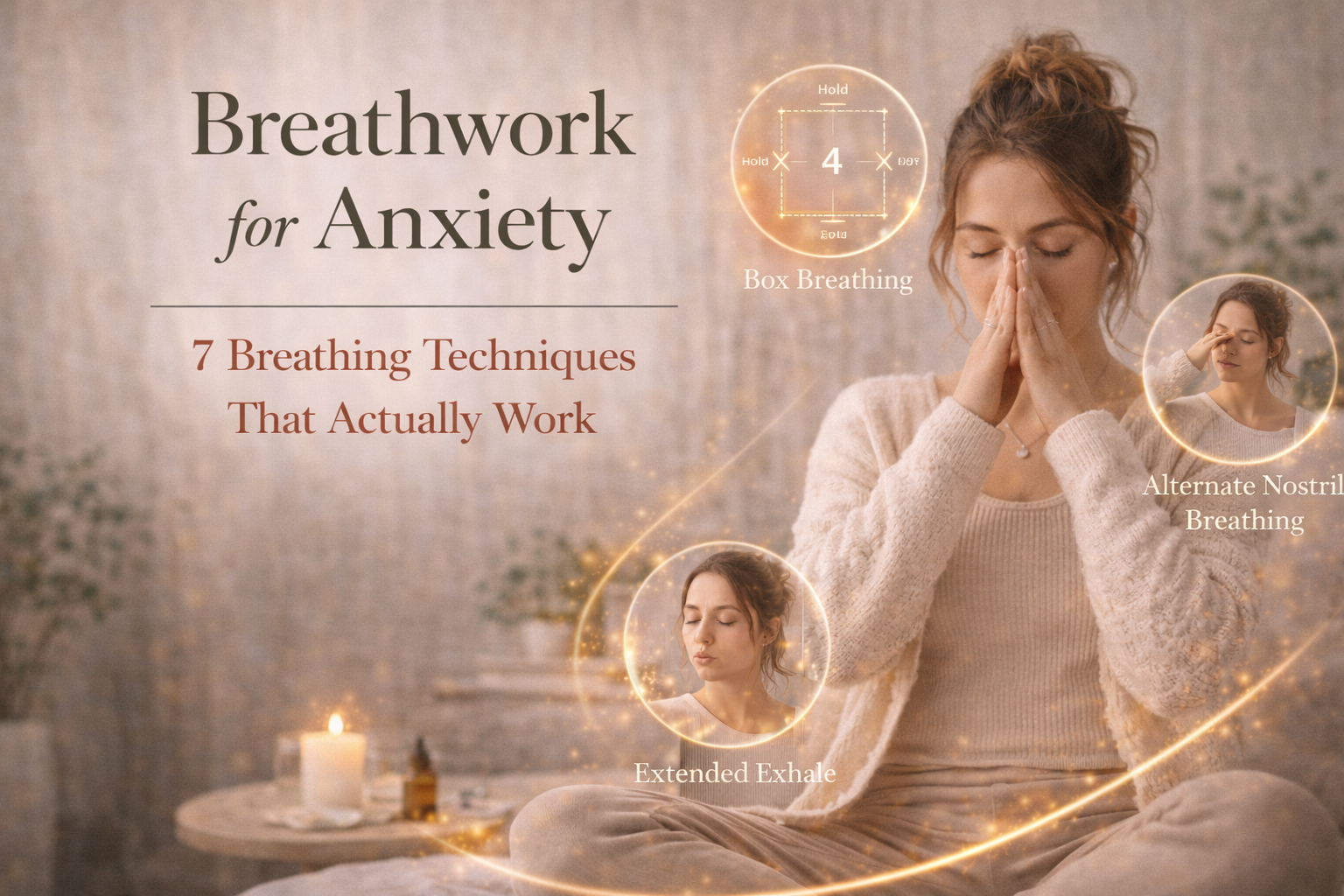
If you struggle with anxiety, you've probably been told to “just take a deep breath.” Sometimes that helps. Sometimes it does absolutely nothing. And sometimes it can even feel irritating when your body is already overwhelmed.
That is because not all breathing techniques work the same way.
When anxiety rises, your nervous system shifts into a protective state. Your heart rate speeds up, your muscles tense, your breath becomes shallow, and your body starts preparing for danger. The goal of breathwork is not to force yourself to relax. It is to give your nervous system a pattern it can actually follow back toward safety.
The right breathing technique can help calm anxiety quickly. The wrong one, or even just the wrong one for that moment, may not help much at all. That is why it is useful to have more than one tool.
Quick List: 7 Breathing Techniques for Anxiety
If you're looking for the best breathing exercises for anxiety, start here:
- Extended exhale breathing
- The physiological sigh
- Coherent breathing
- Box breathing
- Humming on the exhale
- 4-6 grounding breath
- Guided somatic breathwork
These breathwork techniques for anxiety can help calm the nervous system, reduce overwhelm, and support emotional regulation by changing the body's stress response from the inside out.
Why Breathwork Helps Anxiety
Breathing is one of the few functions in the body that is both automatic and under conscious influence. That makes it a direct doorway into the nervous system.
When anxiety is high, breathing often becomes fast, shallow, tight, or held. That breathing pattern sends a message to the brain that something is wrong. Breathwork interrupts that loop by changing the message.
Through breath, you can slow the stress response, activate the parasympathetic nervous system, improve vagal tone, and create a felt sense of steadiness in the body. This is why breathwork is one of the most effective body-based tools for anxiety.
How to Know Which Breathing Technique to Use
Different breath patterns support different states. Some are better for panic. Some are better for racing thoughts. Some are best for building long-term nervous system resilience.
Rather than asking, “What is the one best breathwork technique for anxiety?” it is often more useful to ask, “What does my body need right now?”
| If you feel... | Try... | Best effect |
|---|---|---|
| Racing thoughts or chronic anxiety | Extended exhale breathing | Calms the stress response |
| Panic or sudden overwhelm | Physiological sigh | Down-regulates quickly |
| General nervous system dysregulation | Coherent breathing | Builds steadiness over time |
| Need structure and focus | Box breathing | Creates containment and rhythm |
| Tightness or internal agitation | Humming on the exhale | Stimulates the vagus nerve |
| Need grounding fast | 4-6 grounding breath | Simple, accessible regulation |
| Deep-rooted anxiety patterns | Guided somatic breathwork | Supports deeper healing |
7 Breathing Techniques for Anxiety That Actually Work
Technique 01
Extended Exhale Breathing
Why it works: A longer exhale stimulates the parasympathetic nervous system and helps slow heart rate. This is often one of the best breathing exercises for anxiety because it is simple, effective, and easy to use almost anywhere.
Technique 02
The Physiological Sigh
Why it works: This pattern helps release excess carbon dioxide buildup and rapidly regulate the body's stress response. It is one of the most useful tools when you need to calm anxiety fast.
Technique 03
Coherent Breathing
Why it works: Coherent breathing creates a balanced rhythm between inhale and exhale, which can support heart rate variability and nervous system regulation. This is a strong daily practice for people with chronic anxiety.
Technique 04
Box Breathing
Why it works: Box breathing gives the mind something structured to follow, which can be very helpful when anxiety feels chaotic. It can be especially supportive before stressful situations like meetings, conversations, or travel.
Technique 05
Humming on the Exhale
Why it works: Humming creates vibration in the throat and chest, which can stimulate the vagus nerve and help the body shift toward calm. It is especially helpful when anxiety feels stuck in the chest, throat, or jaw.
Technique 06
4-6 Grounding Breath
Why it works: This is a slightly simpler version of extended exhale breathing that combines breath with grounding. It works well when you need something discreet, practical, and easy to remember.
Technique 07
Guided Somatic Breathwork
Why it works: This goes beyond quick relief. Guided somatic breathwork can help you access deeper stress patterns, emotional holding, and nervous system imprints that contribute to chronic anxiety over time.
What Breathwork Helps Anxiety Fast?
If you need relief quickly, start with the physiological sigh, extended exhale breathing, or humming on the exhale. These are often the most effective breathing techniques for anxiety when your body is highly activated and you need a faster shift.
If your anxiety is less acute and more ongoing, coherent breathing or a simple 4-6 grounding breath may be more supportive. These help build steadiness rather than only trying to “turn down” anxiety in the moment.
When to Use Breathwork for Anxiety
- When you wake up anxious or already bracing for the day
- Before a stressful conversation, event, or appointment
- During racing thoughts or an anxiety spike
- After conflict, overstimulation, or emotional overwhelm
- Before bed when your body will not settle
- As part of a daily nervous system regulation practice
Breathwork is often most effective when it becomes something you practice regularly, not only when anxiety is already at its peak.
How to Start a Breathwork Practice for Anxiety
You do not need a long or complicated routine. Start with one technique that feels accessible. For many people, that is extended exhale breathing or the 4-6 grounding breath.
A simple daily rhythm might look like this: 3 minutes of coherent breathing in the morning, the physiological sigh during stress spikes, and humming on the exhale before bed. Over time, this helps your body build familiarity with regulation.
"The goal of breathwork is not perfect breathing. It is creating enough safety in the body that your nervous system can soften, settle, and remember a different state."
When Breathwork Alone Isn't Enough
Breathwork can be powerful for anxiety, but sometimes chronic anxiety has deeper roots in trauma, long-term stress, or protective nervous system patterns that need more support.
If breathwork helps but only takes you so far, that does not mean you are doing it wrong. It may simply mean your system needs deeper healing work alongside regulation tools. This is where integrative somatic breathwork, nervous system education, and trauma-informed support can make a profound difference.
Ready to experience breathwork with deeper support?
My 1:1 Integrative Somatic Breathwork sessions help calm anxiety, regulate the nervous system, and support healing beneath the surface of chronic stress and overwhelm.
Book a Breathwork Session with Rachel →Frequently Asked Questions
Does breathwork really help anxiety?
Yes. Breathwork can help reduce anxiety by directly influencing the autonomic nervous system. Specific breathing patterns can slow heart rate, lengthen the exhale, stimulate the vagus nerve, and help the body shift out of fight-or-flight mode.
What is the best breathing technique for anxiety?
Some of the best breathing techniques for anxiety include extended exhale breathing, the physiological sigh, coherent breathing, box breathing, and humming on the exhale. The best one depends on whether you feel anxious, panicky, overwhelmed, or disconnected.
How quickly can breathwork calm anxiety?
Some breathwork techniques can reduce anxiety within 1 to 5 minutes, especially extended exhale breathing, the physiological sigh, and humming. More lasting nervous system change happens with regular practice over time.
Can breathwork make anxiety worse?
Sometimes, yes. More intense or activating breathwork may feel overwhelming for people with trauma or a highly sensitive nervous system. It is often helpful to start with gentle, regulating breath patterns and go slowly.
What is the difference between breathwork and deep breathing?
Deep breathing is a broad relaxation tool. Breathwork refers to intentional breathing patterns used for specific effects such as calming anxiety, regulating the nervous system, increasing energy, or processing emotion. Somatic breathwork also includes body awareness and nervous system support.