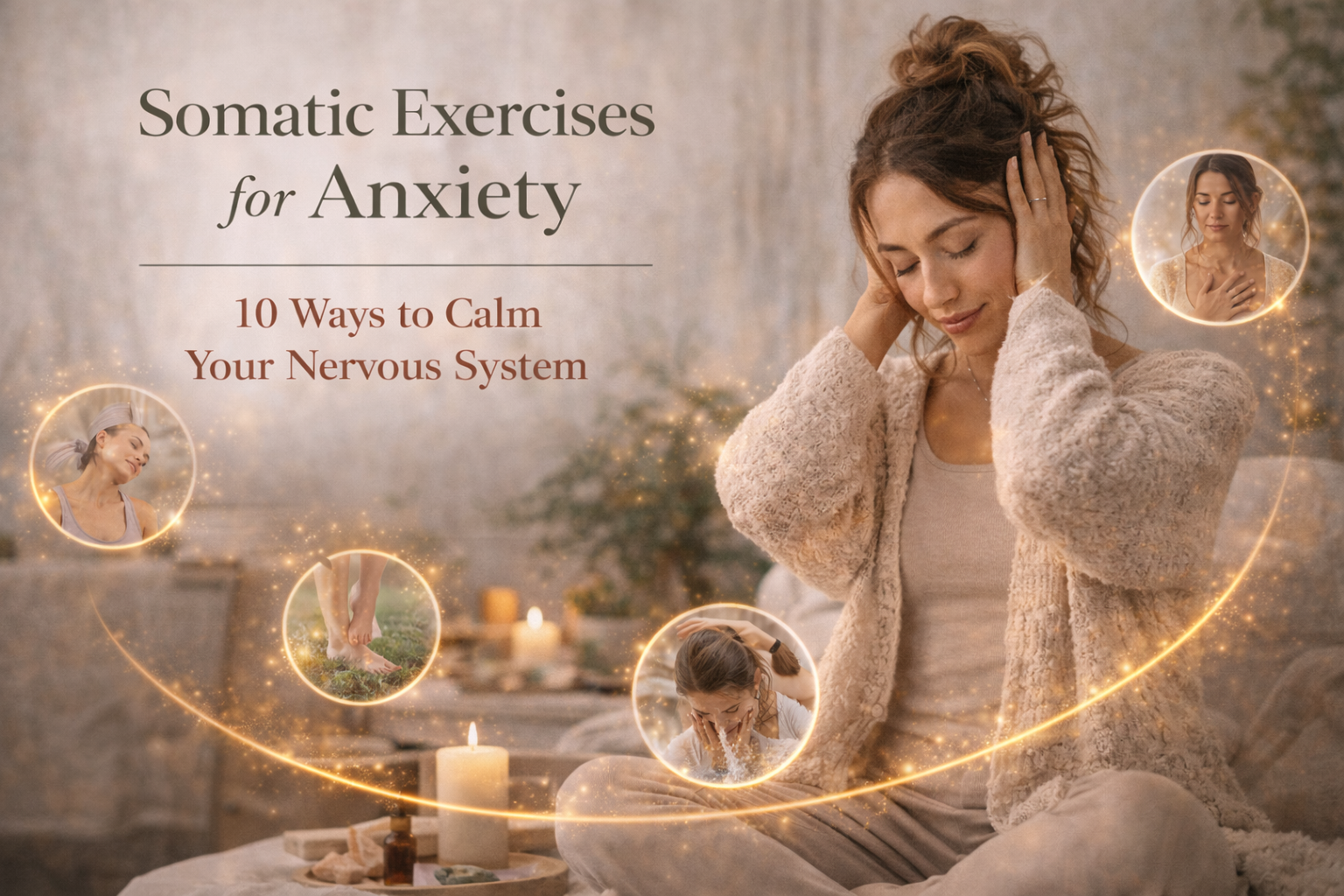
Somatic Exercises for Anxiety: 10 Ways to Calm Your Nervous System
If you live with anxiety, you've probably tried approaches that focus mostly on the mind: positive thinking, journaling, talking things through, or trying to reason your way out of the spiral. While those tools can absolutely help, anxiety is not only a mental experience.
Anxiety is also a nervous system state.
When your nervous system perceives stress or threat, your body shifts into fight-or-flight mode. Your heart rate increases. Your breath becomes shallow or constricted. Your muscles tense. Your thoughts speed up. You may feel restless, flooded, panicked, or unable to settle.
Somatic exercises work differently. Instead of trying to think your way out of anxiety, they work directly with the body to create a felt sense of safety. They help your nervous system receive the message that, in this moment, you are okay.
Quick List: 10 Somatic Exercises for Anxiety
If you're looking for the best somatic exercises for anxiety, start here:
- Extended exhale breathing
- Orienting to the environment
- Grounding through the feet
- The physiological sigh
- Gentle body shaking
- Humming on the exhale
- Cold water on the face
- Self-holding or a self-hug
- Slow neck and shoulder release
- Guided somatic breathwork
These body-based exercises for anxiety help calm stress, reduce overwhelm, and support nervous system regulation by working from the body up.
What Are Somatic Exercises?
Somatic exercises are body-based practices that help you notice internal sensations, release excess activation, and regulate the autonomic nervous system. The word somatic comes from the Greek word soma, which means body.
These exercises are helpful because anxiety often lives in the body first: in tightness, bracing, shallow breathing, racing energy, or emotional overload. Somatic tools address the physiological side of anxiety, not just the mental side.
Most somatic practices support the parasympathetic nervous system, the branch responsible for rest, recovery, digestion, and emotional regulation.
Why Somatic Exercises Help Anxiety
When you're anxious, your body is often acting as if danger is present, even when your mind knows you're safe. This is why it can feel so frustrating when insight alone doesn't fully calm the experience.
Somatic practices help interrupt that cycle by sending new signals into the nervous system. Through breath, movement, grounding, pressure, sound, and sensory awareness, the body begins to shift from protection toward regulation.
This is why somatic work can be so effective for anxiety: it does not ask you to override the body. It teaches you how to listen to it and support it.
10 Somatic Exercises for Anxiety
Exercise 01
Extended Exhale Breathing
Why it works: A longer exhale activates the parasympathetic nervous system and stimulates the vagus nerve, which helps slow the body's stress response. This is one of the best somatic exercises for anxiety when you need relief fast.
Exercise 02
Orienting to the Environment
Why it works: Orienting helps your nervous system register the present environment and recognize that there is no immediate threat. It is a simple body-based exercise for anxiety that supports grounding and safety.
Exercise 03
Grounding Through the Feet
Why it works: Proprioceptive input helps bring awareness back into the body. This can be especially supportive when anxiety makes you feel ungrounded, disconnected, or overstimulated.
Exercise 04
The Physiological Sigh
Why it works: This breathing pattern helps release excess tension and regulate the body's stress chemistry quickly. It's one of the most effective somatic exercises for anxiety when your system feels suddenly activated.
Exercise 05
Gentle Body Shaking
Why it works: Shaking can help discharge excess sympathetic activation. This is a useful tool when your body feels buzzy, agitated, or full of nervous energy.
Exercise 06
Humming on the Exhale
Why it works: Humming creates vibration that can stimulate the vagus nerve and help your body move toward a calmer, more regulated state.
Exercise 07
Cold Water on the Face
Why it works: Cold stimulation can activate the dive reflex, which helps shift the body toward parasympathetic regulation. This is one of the most practical ways to calm anxiety naturally when you're highly activated.
Exercise 08
Self-Holding or a Self-Hug
Why it works: Gentle pressure and supportive touch can help the body feel contained and safe. This is especially supportive when anxiety has a tender, emotional, or vulnerable quality.
Exercise 09
Slow Neck and Shoulder Release
Why it works: Anxiety often lives in the neck, shoulders, jaw, and chest. Releasing tension in these areas can help the whole system feel less defended and more settled.
Exercise 10
Guided Somatic Breathwork
Why it works: This goes beyond moment-to-moment relief. Guided somatic breathwork supports deeper nervous system healing by working with stored stress patterns and the emotional roots beneath chronic anxiety.
Which Somatic Exercises Work Best for Anxiety?
The best somatic exercises for anxiety depend on what your body is experiencing in the moment.
| If you feel... | Try... | Why it helps |
|---|---|---|
| Racing thoughts or general anxiety | Extended exhale breathing | Slows the stress response and activates the parasympathetic system |
| Hypervigilant or unsafe | Orienting to the environment | Helps the body recognize present-moment safety |
| Overwhelmed or ungrounded | Grounding through the feet | Brings awareness back into the body |
| Panic or intense activation | Physiological sigh or cold water on the face | Supports faster down-regulation |
| Tender, emotional, or needing comfort | Self-holding or humming | Creates a felt sense of soothing and containment |
| Chronically anxious | Guided somatic breathwork | Supports deeper nervous system healing over time |
When to Use Somatic Exercises for Anxiety
You can use somatic exercises for anxiety in many different moments throughout the day. They are not only for panic or crisis. In fact, they often work best when they become part of your regular nervous system care.
- When you wake up feeling anxious or already braced for the day
- Before a difficult conversation, meeting, or stressful event
- During an anxiety spike or moment of overwhelm
- After conflict, overstimulation, or emotional activation
- Before bed when your mind and body won't settle
- As part of a daily nervous system regulation routine
The more often your body experiences these cues of safety, the easier it becomes to access them when you truly need them.
How to Build a Somatic Practice
You do not need to do all 10 exercises every day. Start with one or two practices that feel simple and accessible. Consistency matters more than doing everything.
A gentle daily rhythm could look like this: extended exhale breathing in the morning, grounding through your feet during the day, and humming or self-holding before bed. Over time, your body begins to recognize these as familiar pathways back to calm.
"Anxiety isn't only something you think. It's something your body experiences. When you learn how to work with your nervous system directly, regulation becomes more possible."
When Somatic Exercises Aren't Enough
Somatic exercises are incredibly helpful for reducing anxiety in the moment and building more nervous system resilience over time. But if your anxiety feels chronic, deeply rooted, or connected to trauma, these tools may be one part of a larger healing process.
That is where deeper somatic work can help. Practices like integrative breathwork, nervous system education, inner child healing, and trauma-informed support can begin to address the underlying patterns that your body has been holding for a long time.
Ready to go deeper than coping tools alone?
My 1:1 Integrative Somatic Breathwork sessions help calm anxiety, regulate the nervous system, and support deeper healing of the patterns stored in the body.
Book a Breathwork Session with Rachel →Frequently Asked Questions
Do somatic exercises really help anxiety?
Yes. Somatic practices help regulate the nervous system and activate the parasympathetic response, which allows the body to shift out of fight-or-flight mode. Because anxiety is not only mental but physiological, body-based tools can create noticeable relief.
How quickly do somatic exercises work?
Some somatic exercises, such as extended exhale breathing, the physiological sigh, grounding through the feet, or cold water on the face, can reduce anxiety within a few minutes. Long-term change happens through consistent practice over time.
What are the best somatic exercises for anxiety?
Some of the best somatic exercises for anxiety include extended exhale breathing, orienting to the environment, grounding through the feet, the physiological sigh, humming, gentle shaking, cold water stimulation, self-holding, and guided somatic breathwork.
Are somatic exercises the same as meditation?
No. Meditation often focuses on awareness of thoughts and attention. Somatic exercises work directly with body sensations, movement, breath, and nervous system responses to create a felt sense of safety and regulation.
When should I use somatic exercises for anxiety?
Somatic exercises can be used during anxiety spikes, before stressful conversations, after overwhelming experiences, before sleep, or as part of a daily nervous system regulation practice. The best time is whenever your body needs support returning to a calmer state.