A Daily Nervous System Reset Routine (Morning and Evening Practices)
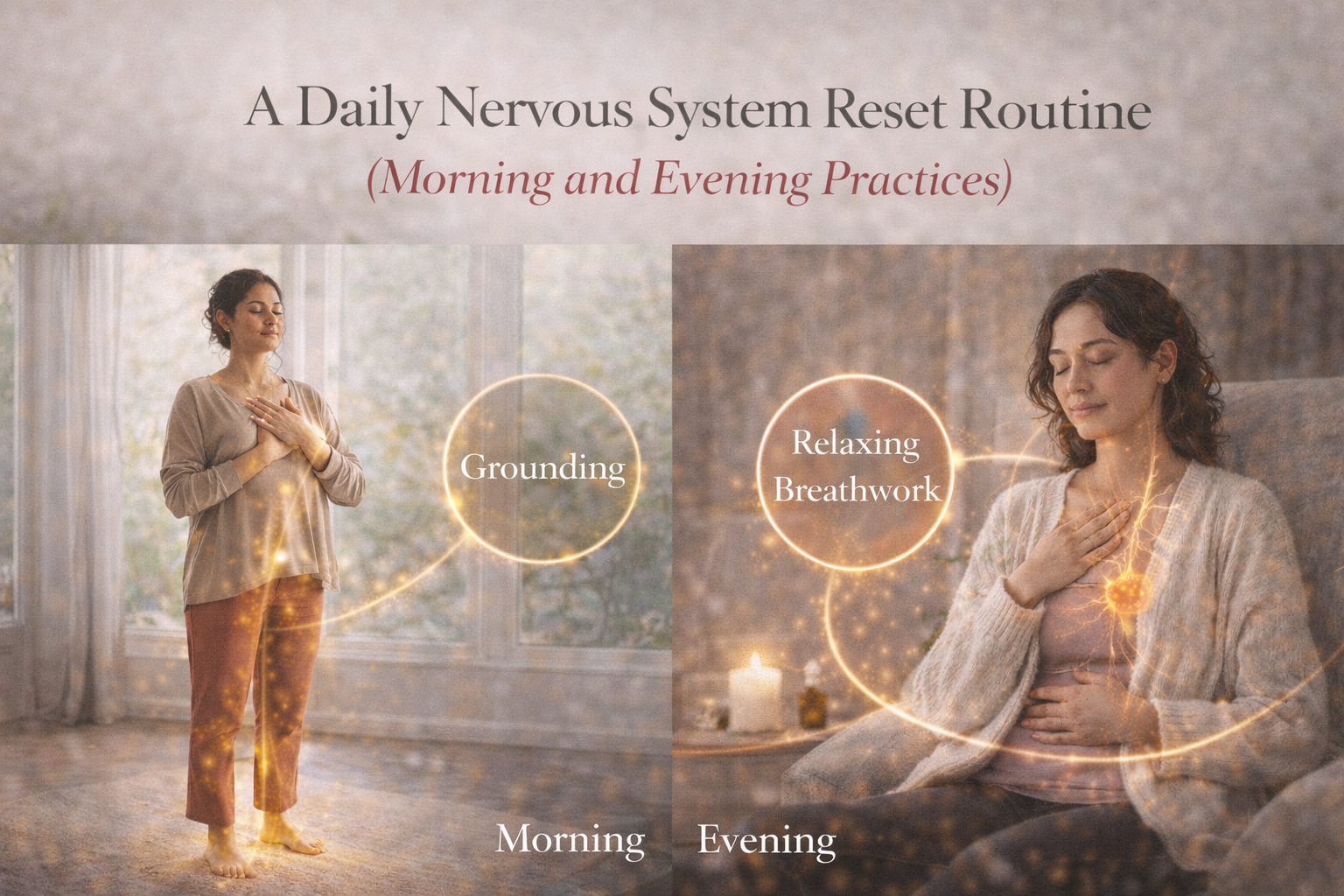
If your body feels like it lives in stress mode — anxious in the morning, overstimulated during the day, and unable to fully settle at night — you do not necessarily need a perfect lifestyle overhaul. Often, what helps most is a simple, consistent nervous system reset routine.
Because nervous system regulation is not only something you do in moments of crisis. It is something you build through small, repeated cues of safety over time.
A daily routine gives your body more than “self-care.” It gives your nervous system structure, rhythm, and predictability. And for an anxious or dysregulated system, that can be deeply healing.
In this guide, you'll learn a practical morning and evening nervous system routine to help reduce anxiety, regulate stress, and support a calmer baseline throughout the day.
Quick Summary: A Daily Nervous System Reset Routine
A supportive daily nervous system routine often includes:
- Gentle breathwork
- Grounding through the body
- Morning light and hydration
- Intentional movement
- Reducing overstimulation
- Transitions that help the body slow down
- Evening practices that signal safety and rest
The goal is not to do everything perfectly. The goal is to help your body receive regular cues that it is safe, supported, and allowed to come out of chronic survival mode.
Why Daily Nervous System Regulation Matters
Your nervous system learns through repetition. If your days begin with stress, screens, rushing, tension, and urgency — and end with overstimulation, doom scrolling, or collapsing from exhaustion — your body may never fully get the message that it is safe to soften.
That does not mean you are doing life wrong. It means your system may need more intentional support.
A daily nervous system reset routine helps create a more regulated baseline. Instead of waiting until anxiety is at a 10, you begin supporting your body before it reaches that point.
What a Good Nervous System Reset Routine Should Do
A good routine should not feel like another rigid standard you have to perform perfectly. It should feel supportive, simple, and doable.
The best nervous system reset routine helps your body:
- Wake up without immediately going into stress mode
- Move through the day with more steadiness
- Recover from activation more easily
- Transition into rest at night with more ease
- Build long-term nervous system resilience
Morning vs. Evening Regulation: What Each One Supports
| Time of day | Main goal | What it supports |
|---|---|---|
| Morning | Set a grounded baseline | Less anxiety, more steadiness, smoother start to the day |
| Daytime | Interrupt stress buildup | More resilience and less overwhelm |
| Evening | Signal safety and rest | Better sleep, less tension, more recovery |
Morning practices tend to help you begin the day from a more regulated place. Evening practices help tell the body it is safe to come down, soften, and move toward rest.
A Morning Nervous System Reset Routine
You do not need an elaborate two-hour ritual. Even 10 to 20 intentional minutes can create a meaningful shift.
Morning Step 01
Wake Up Without Immediately Reaching for Your Phone
Why it helps: Jumping straight into screens can flood the body with stimulation and pull you into stress mode before your day has even begun.
Morning Step 02
Hydrate and Breathe
Why it helps: Hydration supports the body physically, while extended exhale breathing helps calm early-morning nervous system activation.
Morning Step 03
Ground Through Your Feet or Body
Why it helps: Grounding helps orient the nervous system to the present moment and creates a sense of support before the day starts moving quickly.
Morning Step 04
Get Morning Light
Why it helps: Morning light helps regulate your body's internal clock, which supports mood, sleep, and nervous system stability across the whole day.
Morning Step 05
Add Gentle Movement
Why it helps: Movement helps discharge overnight tension and supports a more regulated transition into activity and alertness.
A Simple Morning Routine Example
| Practice | Time | Purpose |
|---|---|---|
| No phone right away | 2–5 min | Reduces early overstimulation |
| Water + extended exhale breathing | 3–5 min | Calms activation and grounds the body |
| Feet on the floor / grounding | 1–2 min | Creates presence and support |
| Morning light | 5–10 min | Supports mood and circadian rhythm |
| Gentle movement | 3–10 min | Releases tension and builds flow |
An Evening Nervous System Reset Routine
Evening regulation is less about productivity and more about helping the body know it can stop bracing.
Evening Step 01
Reduce Stimulation Gradually
Why it helps: A dysregulated system often needs a gradual descent into rest. Reducing sensory input helps the body start shifting out of activation.
Evening Step 02
Use a Breath Practice to Signal Safety
Why it helps: Evening breathwork helps the body move toward parasympathetic regulation and creates a clearer transition into rest.
Evening Step 03
Humming or Gentle Sound
Why it helps: Vibration and calming sound can help stimulate the vagus nerve and create a sense of emotional settling.
Evening Step 04
Release the Day Through Gentle Movement or Stretching
Why it helps: Stress accumulates in the body. Evening movement can help complete the day physically instead of carrying that tension into sleep.
Evening Step 05
Create a Cue of Emotional Safety
Why it helps: The body often needs more than “sleep hygiene.” It needs cues of safety, comfort, and completion before it can fully let go.
A Simple Evening Routine Example
| Practice | Time | Purpose |
|---|---|---|
| Reduce lights and screens | 15–30 min before bed | Signals the body to slow down |
| Breathwork | 3–5 min | Supports parasympathetic activation |
| Humming or calming sound | 2–3 min | Stimulates the vagus nerve |
| Gentle stretching | 3–5 min | Releases held tension |
| Self-holding / journaling / quiet ritual | 2–5 min | Creates emotional safety and closure |
What If You Can Only Do a Few Minutes?
That still counts.
A nervous system reset routine does not need to be long to be effective. Even a few minutes of consistent support can help the body learn a different rhythm.
If all you can do is one minute of grounding in the morning and three minutes of breathing before bed, that is still meaningful. What matters most is repetition, not perfection.
How to Make the Routine Actually Stick
- Start with 2 to 3 practices, not 10
- Link them to things you already do, like waking up or brushing your teeth
- Keep the routine simple enough that it feels sustainable
- Choose practices your body actually responds well to
- Let it be supportive, not another thing to “get right”
The most effective nervous system regulation routine is the one you will actually return to.
"A daily nervous system reset routine is not about doing more. It is about helping your body experience enough consistency, safety, and rhythm that calm starts to feel more familiar."
When Daily Routines Become Deeper Healing
A daily routine can create meaningful change on its own, especially if your nervous system mainly needs more rhythm and support. But if your system has been shaped by chronic stress, burnout, trauma, or long-standing anxiety, deeper healing may also be needed.
That is where somatic work can help. Daily routines build the foundation. Somatic healing helps address the patterns underneath.
Together, they can help your body move from simply surviving the day to feeling more safe, steady, and at home in itself.
Ready to support your nervous system more deeply?
My 1:1 Integrative Somatic Breathwork sessions help calm anxiety, increase regulation, and support deeper healing beneath chronic stress and overwhelm.
Book a Breathwork Session with Rachel →Frequently Asked Questions
What is a nervous system reset routine?
A nervous system reset routine is a set of daily practices that help your body move out of chronic stress and into greater regulation. These routines often include breathwork, grounding, movement, orienting, and calming rituals that support the nervous system in the morning and evening.
How do I regulate my nervous system every day?
You can regulate your nervous system daily through simple practices like extended exhale breathing, grounding through the feet, sunlight, gentle movement, hydration, nervous system check-ins, humming, and calming evening rituals that help the body settle before sleep.
What is the best morning routine for nervous system regulation?
A supportive morning nervous system routine often includes gentle breathwork, grounding, light exposure, hydration, and a slow transition into the day rather than immediately jumping into stress, screens, or productivity.
What is the best evening routine for anxiety and nervous system regulation?
A supportive evening routine may include reducing stimulation, slow breathing, humming, gentle stretching, warm lighting, self-holding, journaling, and creating cues of safety that tell the body it is time to rest.
How long does it take to reset the nervous system?
Some practices can create a noticeable shift within minutes, but building a more regulated nervous system happens through repetition over time. A daily routine helps the body learn safety and recovery more consistently.