How to Calm Your Nervous System in 5 Minutes (Science-Backed Techniques)
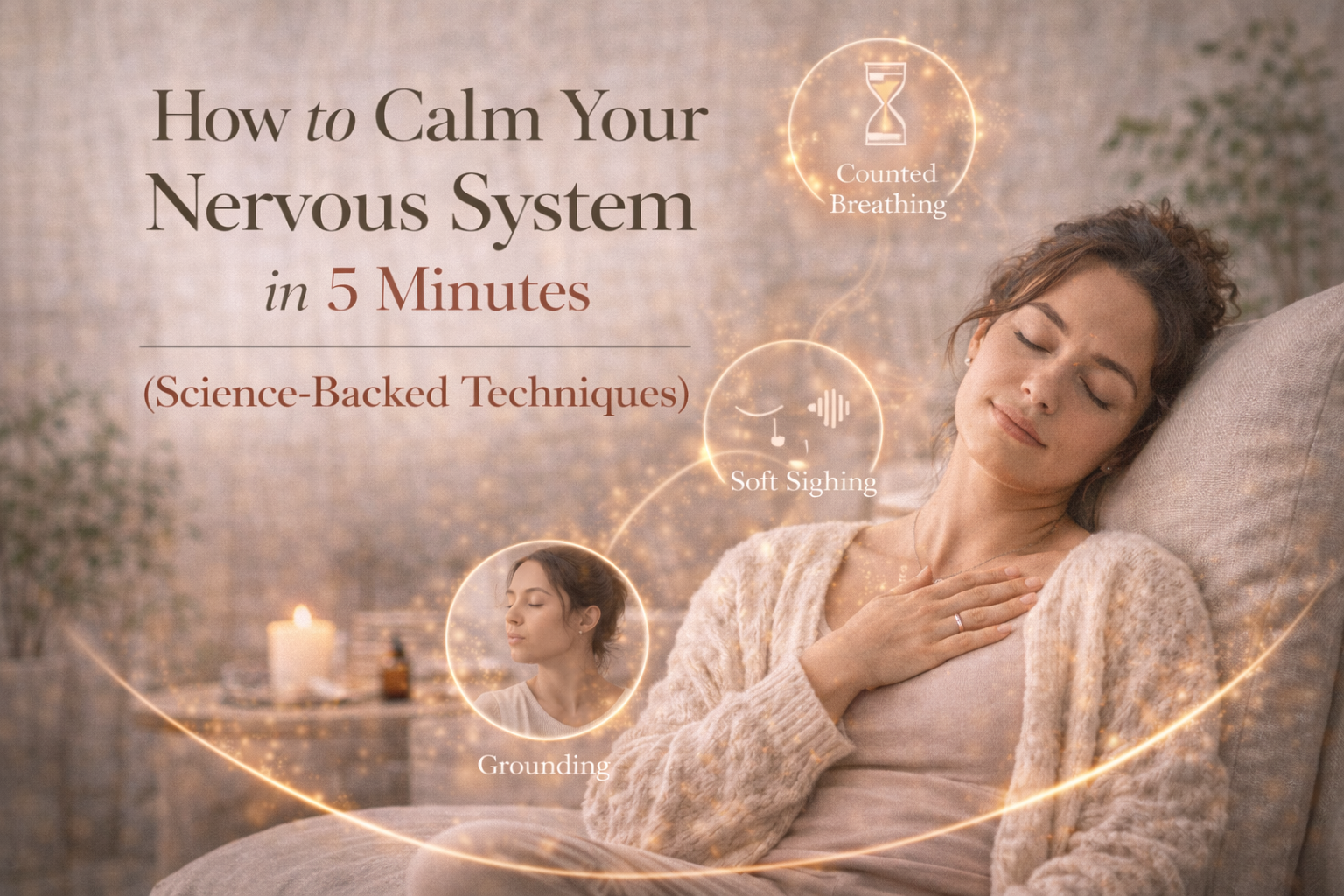
If your body feels stuck in stress — tight chest, racing thoughts, clenched jaw, shallow breath, restlessness, overwhelm — you may be asking the exact right question: how do I calm my nervous system fast?
The good news is that you do not always need an hour-long routine to create a shift. In many cases, your nervous system can begin softening in just a few minutes when you use the right tools.
That is because stress is not only happening in your thoughts. It is happening in your physiology. And when you work with the body directly, you can often interrupt the stress response much faster than trying to think your way out of it.
In this guide, you'll learn simple, science-backed techniques to calm your nervous system in 5 minutes or less — especially when anxiety, overwhelm, or stress are running high.
Quick List: How to Calm Your Nervous System in 5 Minutes
If you need a fast nervous system reset, start with one of these:
- Extended exhale breathing
- The physiological sigh
- Grounding through the feet
- Orienting to the room
- Humming on the exhale
- Cold water on the face
- Self-holding or a hand on your chest
These science-backed techniques help regulate the nervous system by reducing fight-or-flight activation and sending cues of safety back into the body.
Why the Nervous System Responds So Quickly
Your nervous system is constantly scanning for cues of danger or safety. This process happens automatically through the autonomic nervous system, which controls stress responses like heart rate, breath, muscle tension, and alertness.
When the body perceives threat, it shifts into a protective mode. You might feel anxious, restless, buzzy, emotionally flooded, or unable to settle. But when the body receives clear cues of safety, it can begin to soften just as quickly.
That is why short somatic practices can work so well. They do not need to be long to be effective. They just need to speak the nervous system's language.
How to Choose the Right 5-Minute Nervous System Reset
Different tools work best for different nervous system states. If you are panicky, you may need a faster down-regulation tool. If you are dissociated or disconnected, you may need grounding. If you are tense and restless, you may need breath plus body awareness.
| If you feel... | Try... | Why it helps |
|---|---|---|
| Racing thoughts or anxious energy | Extended exhale breathing | Slows the stress response |
| Panic or sudden overwhelm | Physiological sigh | Creates a fast physiological shift |
| Floaty, disconnected, or ungrounded | Grounding through the feet | Brings awareness back into the body |
| Hypervigilant or unsafe | Orienting to the room | Helps the body register present-moment safety |
| Tight chest, jaw, or throat | Humming on the exhale | Supports vagal stimulation and softening |
| Emotionally flooded | Cold water on the face | Activates a calming reflex response |
| Tender, shaky, or needing comfort | Self-holding | Creates containment and soothing |
7 Science-Backed Techniques to Calm Your Nervous System in 5 Minutes
Technique 01
Extended Exhale Breathing
Why it works: A longer exhale activates the parasympathetic nervous system and helps tell your body that the danger has passed. This is one of the simplest and most effective ways to calm anxiety fast.
Technique 02
The Physiological Sigh
Why it works: This breathing pattern can create a fast physiological shift and is especially helpful when stress surges suddenly. It is one of the fastest ways to regulate the nervous system in the moment.
Technique 03
Grounding Through the Feet
Why it works: Grounding brings your attention out of spiraling thoughts and back into the body. This can help regulate a nervous system that feels unsteady, floaty, or overstimulated.
Technique 04
Orienting to the Room
Why it works: When the nervous system is activated, it may still be responding as if a threat is present. Orienting helps update the body with present-moment information and can increase a sense of safety.
Technique 05
Humming on the Exhale
Why it works: Humming can stimulate the vagus nerve through vibration and help the body move toward a calmer state. It is especially supportive when stress feels physically held.
Technique 06
Cold Water on the Face
Why it works: Cold stimulation can activate the dive reflex, which helps slow the body's stress response and creates a noticeable calming effect.
Technique 07
Self-Holding
Why it works: Supportive touch can create a felt sense of containment and safety. This is especially helpful when your nervous system feels tender, raw, or emotionally overwhelmed.
What Helps Calm Anxiety Fast?
If you need the fastest possible shift, start with the physiological sigh, cold water on the face, or extended exhale breathing. These tend to work especially well when you are highly activated and need your body to come down quickly.
If you feel more disconnected than panicked, grounding through the feet or orienting to the room may help more. Not every nervous system reset needs to look like deep breathing. Sometimes the most regulating thing is simply helping your body feel where it is.
How to Use These Tools Throughout the Day
- When you wake up already anxious or braced
- Before a meeting, conversation, or stressful event
- During an anxiety spike or moment of overwhelm
- After conflict, overstimulation, or emotional activation
- Before bed when your mind and body will not settle
- As part of a daily nervous system regulation routine
The best fast nervous system reset is often the one you practice regularly. Familiarity helps your body respond more quickly over time.
When 5-Minute Tools Aren't Enough
Quick regulation tools are powerful, but they are not the whole story for everyone. If your nervous system has been living in chronic stress, burnout, trauma, or long-standing anxiety, these techniques may help you feel better in the moment without fully resolving the deeper pattern.
That does not mean they are not working. It simply means your body may need more than symptom relief. It may need deeper support, pacing, and healing at the level of the nervous system itself.
"Sometimes five minutes is enough to create a real shift. And sometimes those five minutes are the doorway into deeper healing your body has been waiting for."
How Somatic Healing Supports Long-Term Regulation
Somatic healing builds on these quick tools by helping the body understand safety more consistently over time. Through breathwork, grounding, body awareness, inner child healing, and trauma-informed support, the nervous system can begin to release the patterns that keep it stuck in survival mode.
The goal is not just to calm down faster. It is to create a body that does not need to stay so activated in the first place.
Ready for more than temporary relief?
My 1:1 Integrative Somatic Breathwork sessions help regulate anxiety, calm the nervous system, and support deeper healing beneath chronic stress and overwhelm.
Book a Breathwork Session with Rachel →Frequently Asked Questions
How can I calm my nervous system quickly?
You can calm your nervous system quickly by using body-based regulation tools such as extended exhale breathing, the physiological sigh, grounding through your feet, orienting to the room, humming, or cold water on the face. These techniques help signal safety to the body and reduce stress activation.
Can you calm your nervous system in 5 minutes?
Yes. Many nervous system regulation tools can create a noticeable shift within 1 to 5 minutes. While deeper healing takes longer, quick practices can reduce activation and help the body move out of fight-or-flight mode.
What is the fastest way to regulate the nervous system?
Some of the fastest ways to regulate the nervous system include the physiological sigh, extended exhale breathing, cold water on the face, humming on the exhale, and grounding practices that bring attention back into the body and present moment.
Why is my nervous system always activated?
A constantly activated nervous system can be related to chronic stress, burnout, trauma, anxiety, overstimulation, or a body that has learned to stay in survival mode. Regulation practices can help, and deeper somatic healing may also be supportive.
What are signs of a dysregulated nervous system?
Common signs include anxiety, restlessness, racing thoughts, difficulty relaxing, emotional overwhelm, chronic tension, fatigue, sleep issues, digestive problems, and feeling numb or disconnected. These are often signs that the nervous system is having difficulty returning to a state of calm.