Polyvagal Theory Explained Simply: How Your Nervous System Creates Anxiety
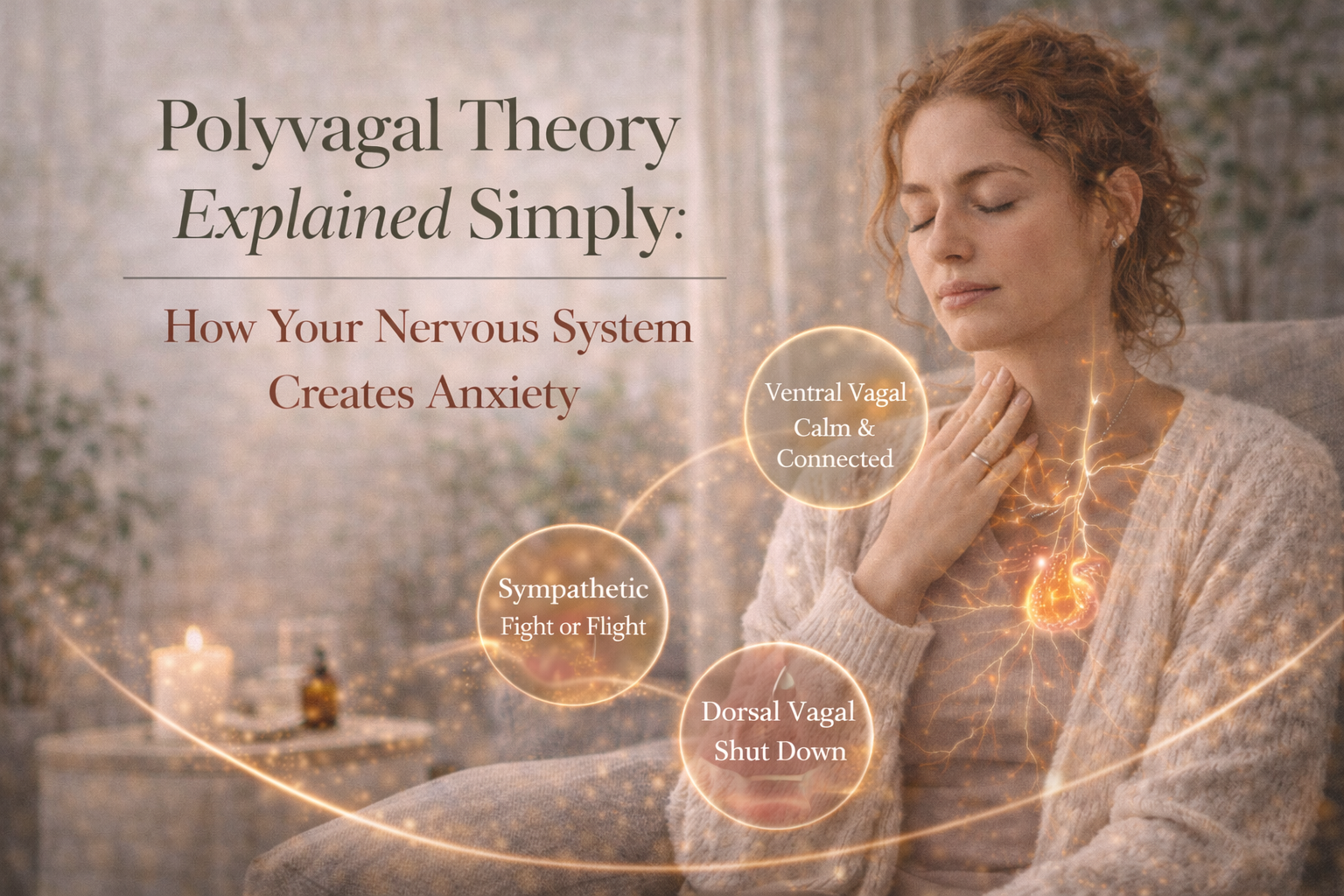
If you've ever wondered why you can logically know you are safe and still feel anxious, overwhelmed, shut down, or on edge, Polyvagal Theory helps explain why.
It offers a simple but powerful reframe: your anxiety is not just about your thoughts. It is also about the state of your nervous system.
Polyvagal Theory explains how your body is constantly scanning for cues of safety or danger, often outside of conscious awareness. Based on what it detects, your nervous system shifts you into different survival states. Sometimes that looks like calm and connection. Sometimes it looks like anxiety and fight-or-flight. Sometimes it looks like shutdown, numbness, or freeze.
Once you understand these states, so much starts to make sense. And more importantly, you can begin working with your nervous system instead of judging yourself for how you respond.
Quick Summary: Polyvagal Theory Explained Simply
At its core, Polyvagal Theory says that your nervous system moves through three main states:
- Ventral vagal: safety, calm, connection, presence
- Sympathetic: fight-or-flight, anxiety, urgency, hypervigilance
- Dorsal vagal: shutdown, numbness, collapse, disconnection
Your body shifts between these states based on whether it perceives safety, danger, or overwhelm. This is why anxiety is often less about “overthinking” and more about a nervous system that is trying to protect you.
What Is Polyvagal Theory?
Polyvagal Theory is a framework developed by Dr. Stephen Porges that helps explain how the autonomic nervous system responds to cues of safety and danger.
The word polyvagal means “many vagal,” referring to different branches of the vagus nerve and how they influence stress, connection, and shutdown responses in the body.
In simple terms, Polyvagal Theory helps us understand that the nervous system is not just switching between “calm” and “stressed.” It is moving through layered survival states depending on what the body perceives is happening.
How Your Nervous System Creates Anxiety
Anxiety often happens when the nervous system shifts into sympathetic activation. This is the fight-or-flight state.
In this state, your body prepares for action. Heart rate increases. Muscles tense. Breathing changes. Attention narrows. Thoughts speed up. You may feel urgency, restlessness, fear, irritation, or like you cannot fully relax.
From a Polyvagal perspective, anxiety is not simply a mindset problem. It is your nervous system's way of saying, “Something does not feel safe right now.”
Sometimes the threat is real and present. Other times it is an old pattern. A memory. A relationship dynamic. Chronic stress. Burnout. Overstimulation. A body that has learned to stay prepared for impact.
The 3 Main Nervous System States in Polyvagal Theory
State 01
Ventral Vagal: Safety and Connection
Why it matters: This is the state of regulation. It does not mean life is perfect. It means your body feels safe enough to stay present.
State 02
Sympathetic: Fight-or-Flight
Why it matters: This is where many anxiety symptoms live. Your nervous system is not trying to sabotage you. It is trying to keep you ready.
State 03
Dorsal Vagal: Shutdown and Freeze
Why it matters: Freeze and shutdown are also protective responses. They often happen when mobilization no longer feels possible or safe.
Why Anxiety and Shutdown Can Both Happen
One of the most helpful parts of Polyvagal Theory is that it explains why you might swing between anxious and exhausted, hypervigilant and numb, over-functioning and shut down.
Many people assume those states are opposites. But from a nervous system perspective, they can be part of the same survival pattern.
You might spend days in sympathetic activation — pushing, striving, bracing, scanning, doing — and then suddenly crash into dorsal vagal exhaustion, numbness, or disconnection. This is often what burnout feels like in the body.
What Triggers a Nervous System Shift?
Your nervous system responds to what Polyvagal Theory calls neuroception — the body's automatic detection of safety or danger. This happens beneath conscious thought.
That means your body may react before your mind catches up.
| Trigger type | Possible nervous system response | How it may feel |
|---|---|---|
| Conflict or criticism | Sympathetic activation | Anxiety, defensiveness, racing thoughts |
| Overwhelm or too much stimulation | Sympathetic or dorsal | Panic, irritability, collapse, shutdown |
| Disconnection or attachment stress | Sympathetic activation | Hypervigilance, people pleasing, fear |
| Trauma reminders | Sympathetic or dorsal | Triggering, freeze, numbness, tension |
| Cues of safety and support | Ventral vagal | Softening, ease, clarity, connection |
How to Know Which State You're In
You do not need to analyze yourself perfectly. Often, a simple check-in is enough.
- If you feel calm, connected, steady, or more open, you may be in ventral vagal.
- If you feel anxious, rushed, tense, angry, or restless, you may be in sympathetic activation.
- If you feel numb, shut down, exhausted, frozen, or far away from yourself, you may be in dorsal vagal shutdown.
This kind of awareness matters because different states need different support. A shutdown system may need grounding and gentle re-engagement. An anxious system may need down-regulation and cues of safety.
How to Move Out of Fight-or-Flight and Into Safety
The goal is not to force yourself into calm. It is to offer your nervous system enough support that it can begin to shift naturally.
Support 01
Extended Exhale Breathing
Why it helps: A longer exhale stimulates the parasympathetic nervous system and supports a move toward safety.
Support 02
Orienting to the Room
Why it helps: Looking around and taking in your environment helps the body update to present-moment reality.
Support 03
Grounding Through the Feet
Why it helps: Physical contact with the ground helps the body feel supported and more anchored.
Support 04
Humming or Gentle Sound
Why it helps: Vibration can stimulate the vagus nerve and increase a sense of calm and regulation.
Support 05
Co-Regulation
Why it helps: Safe connection with another regulated person can help your nervous system borrow safety and settle more easily.
Why Polyvagal Theory Is So Helpful for Healing
Polyvagal Theory can be deeply healing because it removes so much shame. It helps you understand that your responses make sense.
If you get anxious in relationships, if you people please, if you freeze during conflict, if you shut down after stress, if your body struggles to relax — these patterns are not evidence that you are broken. They are signs that your nervous system adapted.
That does not mean you are stuck that way forever. It means healing is less about fixing yourself and more about helping your body experience enough safety to reorganize.
"When you understand your nervous system, anxiety stops looking like a personal failure and starts making sense as a survival response your body learned for a reason."
How Somatic Healing Works With Polyvagal Theory
Somatic healing brings Polyvagal Theory into lived practice. It helps you notice nervous system states in real time and gives you tools to work with them through breath, body awareness, grounding, movement, co-regulation, and trauma-informed support.
Over time, this can increase your capacity to stay in ventral vagal safety more often, recover from activation more quickly, and move through life with more steadiness and self-trust.
The goal is not to never get triggered. The goal is to help your body know how to come back.
Ready to support your nervous system at the root?
My 1:1 Integrative Somatic Breathwork sessions help you understand your nervous system, regulate anxiety, and build a deeper felt sense of safety in your body.
Book a Breathwork Session with Rachel →Frequently Asked Questions
What is Polyvagal Theory in simple terms?
Polyvagal Theory is a framework that explains how the nervous system constantly scans for safety or danger and shifts the body into different states. These states include feeling safe and connected, feeling anxious and mobilized, or feeling shut down and disconnected.
How does Polyvagal Theory explain anxiety?
Polyvagal Theory explains anxiety as a nervous system state, not just a mental issue. When the body senses danger or lack of safety, it can move into sympathetic activation, which creates anxiety, hypervigilance, racing thoughts, tension, and fight-or-flight symptoms.
What are the three nervous system states in Polyvagal Theory?
The three main states are ventral vagal, which is associated with safety and connection; sympathetic activation, which is associated with fight or flight and anxiety; and dorsal vagal shutdown, which is associated with collapse, numbness, disconnection, or freeze.
What is ventral vagal state?
Ventral vagal is the nervous system state of safety, connection, calm, and regulation. In this state, you are more able to rest, think clearly, connect with others, and respond rather than react.
How do you move out of fight-or-flight and into safety?
You can support a shift out of fight-or-flight through nervous system regulation practices such as extended exhale breathing, grounding, orienting, humming, gentle movement, co-regulation, and somatic healing approaches that help the body experience safety.