Sound Healing Explained: The Science Behind Frequency and Nervous System Regulation
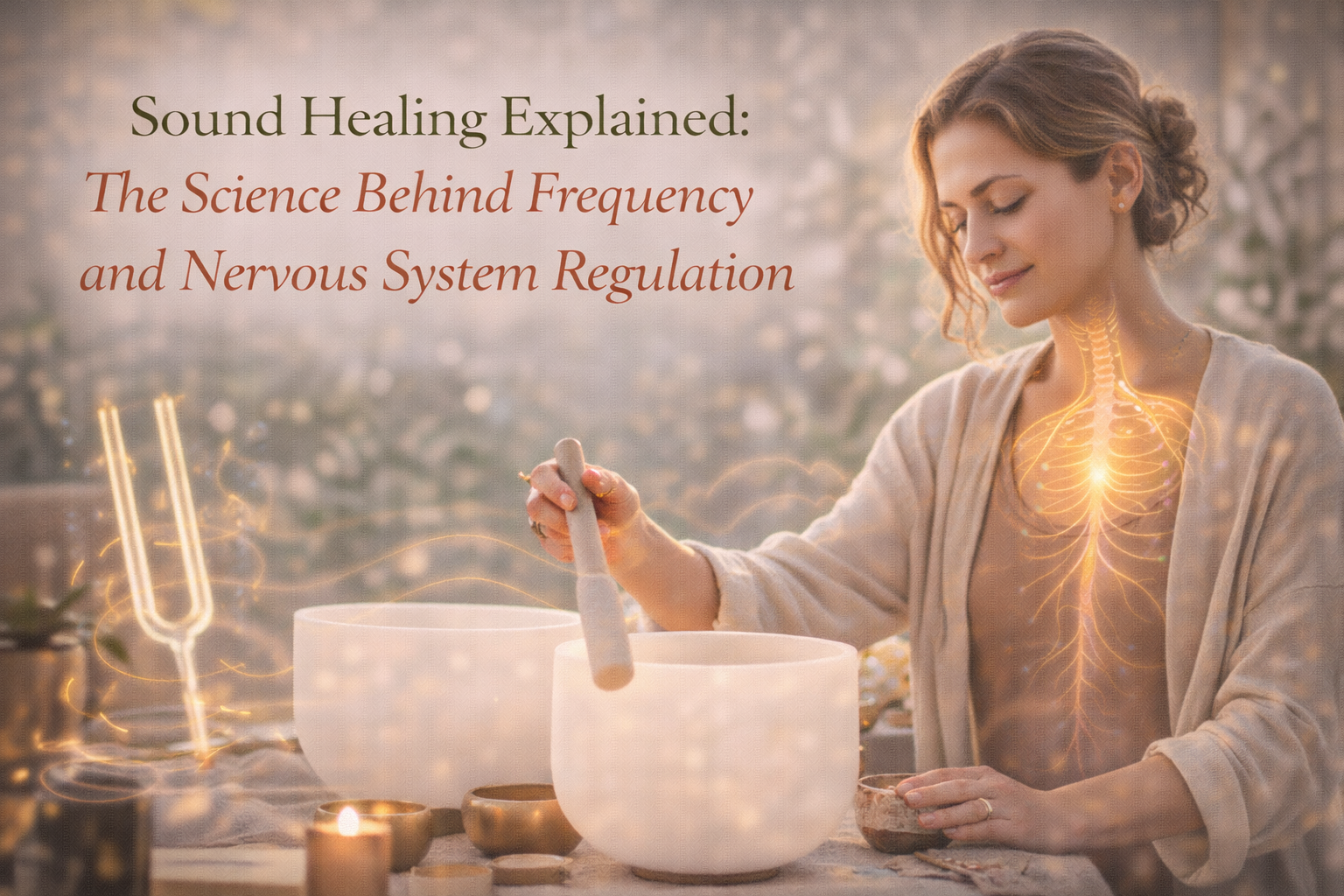
Sound healing has become increasingly popular in wellness spaces, especially among people looking for gentle ways to support anxiety, emotional regulation, and nervous system healing. You may have heard about singing bowls, tuning forks, binaural beats, chanting, humming, or specific frequencies like 432 Hz or 528 Hz and wondered: Is there actually science behind this?
The honest answer is nuanced.
Sound can absolutely affect the body. It can change your breathing, influence your emotional state, alter your level of alertness, and shift how safe or activated your nervous system feels. But the strongest science is not necessarily behind every specific frequency claim you see online. It is more accurate to say that sound, rhythm, tone, vibration, and music can influence the nervous system — and in some cases, that influence can be profoundly regulating.
Understanding that distinction matters. It allows you to appreciate sound healing without needing to overstate what the research proves.
Quick Answer: How Sound May Help the Nervous System
If you're searching for how sound healing may support nervous system regulation, here are the main pathways:
- Sound can slow breathing and support a longer exhale
- Rhythm and repetition can help the body feel more predictable and safe
- Music and soothing tones can influence mood and reduce stress
- Humming and chanting create vibration that may support vagal activation
- Sound can anchor attention in the present moment and reduce mental spiraling
- Some sound-based practices may help shift the body toward parasympathetic regulation
This is why sound-based practices are often used alongside breathwork, meditation, somatic therapy, and other nervous system regulation tools.
What Is Sound Healing?
Sound healing is a broad term used to describe practices that use sound, music, rhythm, vibration, or tone to support wellbeing. That can include crystal singing bowls, Tibetan bowls, gongs, chimes, drumming, binaural beats, humming, chanting, tuning forks, and structured music therapy.
Some sound healing approaches come from ancient contemplative or ceremonial traditions. Others are modern therapeutic methods. Some are used primarily for relaxation. Others are used in more clinical settings to support anxiety, pain, stress, or emotional regulation.
What they all have in common is the idea that sound is not just something we hear. It is something we experience through the whole body.
How Sound Affects the Nervous System
Your nervous system is constantly taking in sensory information and asking a simple question: Am I safe right now? Sound is one of the sensory channels it uses to answer that question.
A harsh, loud, unpredictable sound can feel jarring and activating. A steady, soothing, rhythmic sound can do the opposite. It can help the body soften, orient, and settle.
This happens through several possible pathways:
- Breath: soothing music or humming can naturally slow breathing and lengthen the exhale
- Attention: repetitive sound gives the mind a place to land, which can reduce mental overactivation
- Emotion: sound and music can evoke feelings that help release or reorganize internal stress
- Rhythm: steady rhythm can create predictability, which often helps the body feel safer
- Vibration: vocalization and sound resonance can create felt vibration in the chest, throat, and body
In other words, sound can become a cue of safety — and cues of safety are what help the nervous system regulate.
What Does “Frequency” Actually Mean?
Frequency simply refers to the rate at which sound waves vibrate, measured in hertz (Hz). Every sound has a frequency. Higher frequencies tend to sound higher in pitch. Lower frequencies tend to sound deeper.
In wellness spaces, frequency is often discussed as if certain numbers have unique healing powers. While many people report meaningful personal experiences with specific tones or frequencies, the science is not yet strong enough to say that one exact number works the same way for every body in every context.
What seems more realistic is that the body responds to a combination of factors: pitch, rhythm, tempo, volume, resonance, repetition, personal associations, context, and whether the sound feels soothing or overwhelming to the individual.
So yes, frequency matters because all sound has frequency. But the nervous system likely responds to the whole experience of sound, not only one isolated number.
What the Research Seems Strongest On
When people ask whether sound healing is “real,” it helps to separate different claims.
| Claim | How strong the support is | What to know |
|---|---|---|
| Music and calming sound can reduce stress and anxiety | Stronger support | There is meaningful evidence for music-based and sound-based relaxation approaches |
| Rhythm and sound can influence autonomic state | Moderate support | Sound may affect heart rate, breathing, attention, and emotional regulation |
| Humming and vocalization may support parasympathetic regulation | Moderate support | These practices combine exhalation, vibration, and sensory focus |
| One exact frequency universally heals the body | Limited support | These claims are much less clearly established by current research |
This is part of why it can be more helpful to talk about sound for nervous system regulation than to make overly specific claims that science has not fully confirmed.
5 Sound-Based Practices That May Feel Regulating
Practice 01
Humming on the Exhale
Why it may help: Humming combines a longer exhale with vibration and rhythm. Many people find it soothing because it creates an internal sense of resonance and containment.
Practice 02
Chanting or Toning
Why it may help: Chanting can organize breath, attention, and vibration into one experience. It can also create a sense of rhythm and internal steadiness.
Practice 03
Listening to Gentle Instrumental Music
Why it may help: Music can influence mood, breathing rhythm, and autonomic state. The key is not choosing what is supposedly “healing” for everyone, but what actually feels regulating for you.
Practice 04
Sound Bath or Singing Bowl Meditation
Why it may help: A sound bath offers a prolonged auditory environment that can invite the body into stillness. For some people, that can feel deeply settling. For others, it may be too much sensory input, so gentleness matters.
Practice 05
Binaural Beats or Rhythmic Audio
Why it may help: Some people find rhythmic auditory stimulation calming or focusing. The evidence here is mixed, so this is best approached with curiosity rather than certainty.
Why Sound Feels So Personal
One reason sound healing is hard to reduce to a formula is that sound is deeply personal. A tone that feels peaceful to one person may feel irritating to another. A song that regulates one nervous system may activate grief, memory, or overstimulation in someone else.
This does not mean sound is unreliable. It means the nervous system is relational and context-dependent. Your history, sensory sensitivity, trauma background, and emotional associations all shape how sound lands in the body.
This is especially important for highly sensitive people or people with trauma histories. More sound is not always better. Louder is not always deeper. The most regulating sound is often the one that helps your body feel less defended, not more overwhelmed.
How to Use Sound for Nervous System Regulation
- Choose sounds that feel genuinely soothing rather than forcing yourself to like what is trending
- Keep the volume gentle enough that your body does not brace
- Pair sound with slow breathing, grounding, or stillness
- Notice whether the sound helps you soften, orient, or feel more present
- Stop if a sound becomes overstimulating, disorienting, or emotionally flooding
You can also combine sound with other regulation practices. For example, soft music with extended exhale breathing, humming with grounding through the feet, or a gentle sound bath before sleep.
"Sound can become a cue of safety. Not because one exact frequency magically fixes the nervous system, but because rhythm, tone, resonance, and presence can help the body remember what calm feels like."
When Sound Healing Helps Most
Sound-based practices can be especially supportive during moments of stress, transition, fatigue, anxiety, or emotional overwhelm. They can also be helpful before sleep, after overstimulation, or alongside practices like breathwork and meditation.
At the same time, sound healing is not a replacement for deeper support when anxiety is chronic, trauma-related, or rooted in long-standing nervous system patterns. In those cases, sound can be one regulating tool inside a broader healing process.
Want support calming your nervous system in a deeper way?
My 1:1 Integrative Somatic Breathwork sessions combine body awareness, breath, and nervous system support to help you move beyond chronic stress and anxiety.
Book a Breathwork Session with Rachel →Frequently Asked Questions
What is sound healing?
Sound healing is an umbrella term for practices that use sound, music, rhythm, tone, or vibration to support relaxation, emotional processing, and nervous system regulation. This can include singing bowls, humming, chanting, music therapy, tuning forks, and guided sound-based meditations.
Can sound healing calm the nervous system?
Sound can influence the nervous system by affecting breath, heart rate, attention, emotional state, and the body's sense of safety. Many people find that calming sound, music, humming, or rhythmic auditory input helps reduce stress and settle the body.
Is there scientific evidence for sound healing?
There is meaningful evidence that music-based and sound-based interventions can support relaxation, reduce stress, and help with anxiety for some people. The evidence is stronger for music therapy and general sound interventions than for specific claims that one exact healing frequency works the same for everyone.
Do specific frequencies like 432 Hz or 528 Hz heal the body?
All sound has frequency, but more specific claims that one exact frequency universally heals the body are not strongly established by current research. Sound may still feel deeply regulating, but the relationship is likely more complex than one single number.
Why does humming or chanting feel calming?
Humming and chanting can feel calming because they slow the exhale, create vibration in the throat and chest, and may support vagal activation and parasympathetic regulation. They also provide rhythm, predictability, and sensory focus, which can help the nervous system feel safer.