What Is the Vagus Nerve? How It Controls Anxiety, Stress, and Emotional Safety
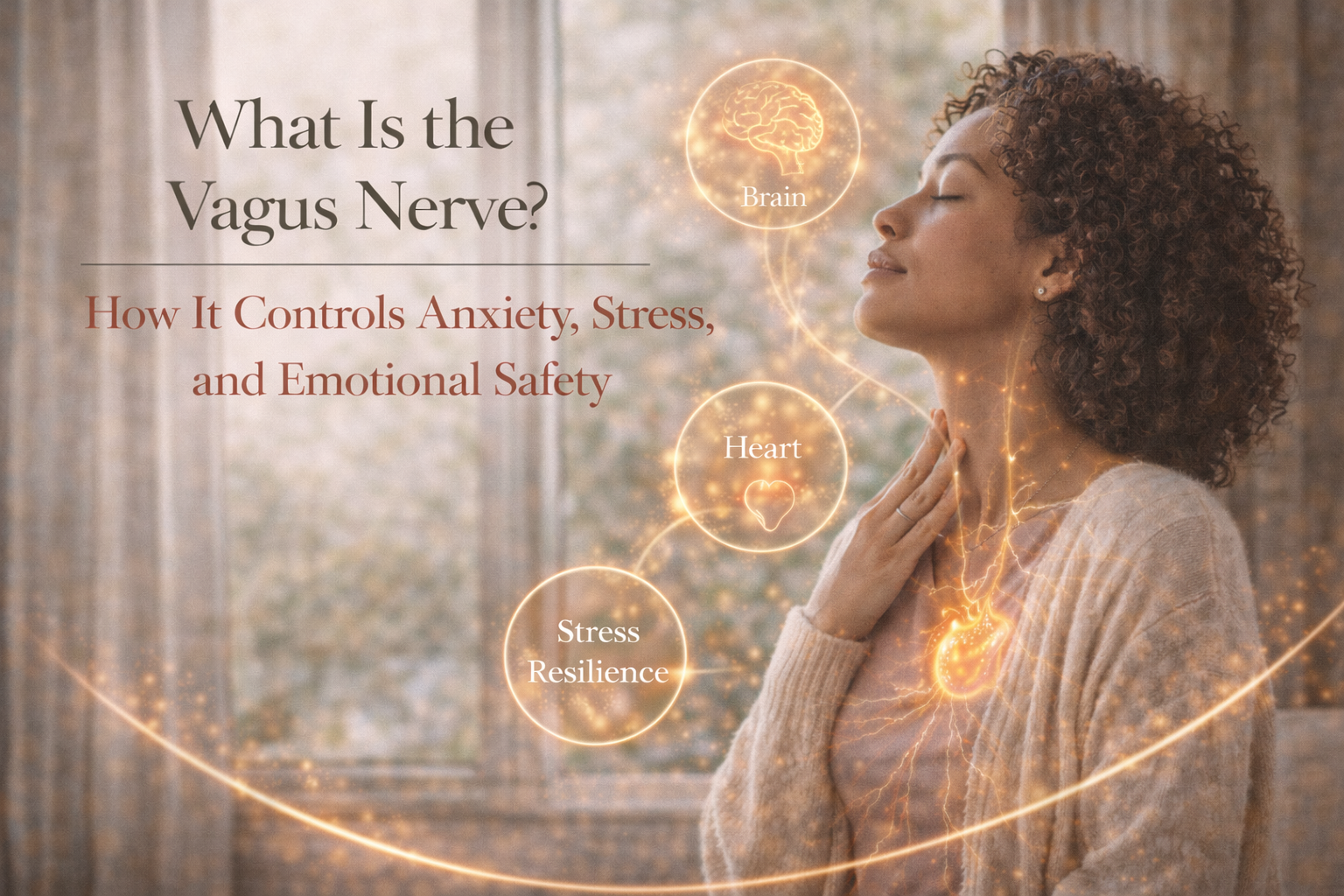
If you've been exploring nervous system healing, anxiety relief, or somatic practices, you have probably heard people talk about the vagus nerve.
In many ways, the vagus nerve is one of the body's most important pathways for calm, connection, and emotional safety. When it is working well, your nervous system can move out of stress and return to balance more easily. When it is underactive or dysregulated, the body can stay stuck in anxiety, overwhelm, or shutdown.
Understanding how the vagus nerve works can completely change how you think about anxiety. Instead of seeing anxiety only as a mental problem, you begin to see it as a nervous system pattern that can be supported and retrained.
Quick Summary: What the Vagus Nerve Does
The vagus nerve plays a key role in regulating the body's stress response. It helps:
- Slow heart rate after stress
- Support calm breathing patterns
- Regulate digestion and internal organs
- Create a felt sense of safety in the body
- Support emotional regulation and resilience
- Shift the nervous system out of fight-or-flight
This is why so many somatic practices — including breathwork, humming, grounding, and cold water exposure — focus on stimulating the vagus nerve.
What Is the Vagus Nerve?
The vagus nerve is the longest cranial nerve in the body. It begins in the brainstem and travels down through the neck into the chest and abdomen, connecting the brain with many major organs.
The word vagus comes from the Latin word for “wandering,” which reflects how widely it travels throughout the body.
This nerve is a central part of the parasympathetic nervous system, often referred to as the “rest and digest” system. When the vagus nerve is active, the body can move out of stress mode and return to calm.
How the Vagus Nerve Influences Anxiety
Anxiety often happens when the nervous system becomes stuck in sympathetic activation — the fight-or-flight response.
The vagus nerve helps counterbalance that response. When it is active, it signals the body that it is safe to slow down. Heart rate decreases. Breathing deepens. Muscles soften. Digestion resumes. The mind becomes clearer.
When vagal tone is low, however, the body may struggle to return to calm after stress. This can create a baseline of chronic anxiety, tension, and hypervigilance.
What Is Vagal Tone?
Vagal tone refers to how responsive and flexible the vagus nerve is. Think of it like fitness for your nervous system.
A higher vagal tone generally means your body can:
- Recover more quickly from stress
- Regulate emotions more easily
- Shift between activation and calm
- Feel safer in connection with others
- Maintain greater emotional resilience
A lower vagal tone may show up as anxiety, poor stress recovery, chronic tension, digestive issues, or difficulty relaxing.
| Higher Vagal Tone | Lower Vagal Tone |
|---|---|
| Faster recovery after stress | Stress lingers in the body |
| Greater emotional resilience | More emotional overwhelm |
| Steadier breathing patterns | Shallow or irregular breathing |
| Better sleep and digestion | Sleep issues or digestive stress |
| Stronger sense of safety | Chronic anxiety or hypervigilance |
How the Vagus Nerve Supports Emotional Safety
The vagus nerve is deeply connected to what researchers call the social engagement system. This system helps regulate facial expression, vocal tone, listening, and connection with others.
When your vagus nerve is active and healthy, your body is more able to feel safe in connection. You can make eye contact, communicate calmly, and respond rather than react.
When this system is offline, however, social interaction may feel stressful or overwhelming. This is one reason trauma and chronic stress can affect relationships so strongly.
Signs Your Vagus Nerve May Be Underactive
Some possible signs of low vagal tone or vagus nerve dysregulation include:
- Chronic anxiety or stress
- Difficulty calming down after activation
- Digestive issues
- Poor sleep quality
- Shallow breathing patterns
- Feeling easily overwhelmed
- Hypervigilance or emotional reactivity
- Feeling disconnected from your body
These experiences are not proof something is “wrong” with you. They often reflect a nervous system that has been under stress for a long time.
How to Stimulate the Vagus Nerve
Fortunately, the vagus nerve is highly responsive to certain body-based practices. Over time, these practices can help strengthen vagal tone and improve nervous system regulation.
Practice 01
Slow Exhale Breathing
Why it works: A longer exhale activates the parasympathetic nervous system and signals safety to the body.
Practice 02
Humming or Vocal Toning
Why it works: Vibrations in the throat stimulate the vagus nerve through the vocal cords.
Practice 03
Cold Water Exposure
Why it works: Cold stimulation can activate reflexes that help slow the heart rate and increase vagal activity.
Practice 04
Grounding and Body Awareness
Why it works: Bringing attention back into the body helps reinforce signals of safety.
Practice 05
Somatic Breathwork
Why it works: Conscious breathwork combined with body awareness can help release stored stress and strengthen vagal tone.
Why Vagus Nerve Work Is So Powerful for Anxiety
When people focus only on thoughts, they often feel stuck trying to control anxiety mentally. But when you begin working with the vagus nerve, you are supporting the physiological systems that create calm.
This approach does not replace cognitive tools or therapy. Instead, it adds another layer — working directly with the body and nervous system.
For many people, that is the missing piece.
"Anxiety is not only something you think. It is something your nervous system experiences. When you support the vagus nerve, you are helping your body remember how to feel safe again."
How Somatic Healing Strengthens the Vagus Nerve
Somatic healing practices work directly with the nervous system. By combining breath, body awareness, movement, grounding, and emotional processing, they help the body release stored stress and gradually build resilience.
Over time, this can increase vagal tone and help your nervous system move more easily between stress and calm.
Instead of feeling stuck in survival mode, your body begins to learn a new baseline of safety.
Ready to support your vagus nerve and calm anxiety at the root?
My 1:1 Integrative Somatic Breathwork sessions help regulate the nervous system, strengthen vagal tone, and support deeper emotional healing.
Book a Breathwork Session with Rachel →Frequently Asked Questions
What is the vagus nerve?
The vagus nerve is the longest cranial nerve in the body and a key part of the parasympathetic nervous system. It connects the brain to organs like the heart, lungs, and digestive system and helps regulate stress and emotional safety.
How does the vagus nerve affect anxiety?
The vagus nerve helps activate the body's calming response. When vagal tone is strong, the body can recover from stress more easily. When it is low, the nervous system may remain stuck in anxiety or fight-or-flight.
What is vagal tone?
Vagal tone refers to how active and responsive the vagus nerve is. Higher vagal tone is associated with greater emotional regulation, resilience, and faster recovery from stress.
Can you strengthen the vagus nerve?
Yes. Practices like slow breathing, humming, grounding, cold exposure, meditation, and somatic exercises can help stimulate and strengthen vagal tone over time.
Why is the vagus nerve important for emotional safety?
The vagus nerve supports the body's safety system. When it is functioning well, it helps regulate emotions, calm the stress response, and support feelings of connection and safety.