Why Nervous System Regulation Is the Missing Piece in Women’s Wellness Retreats
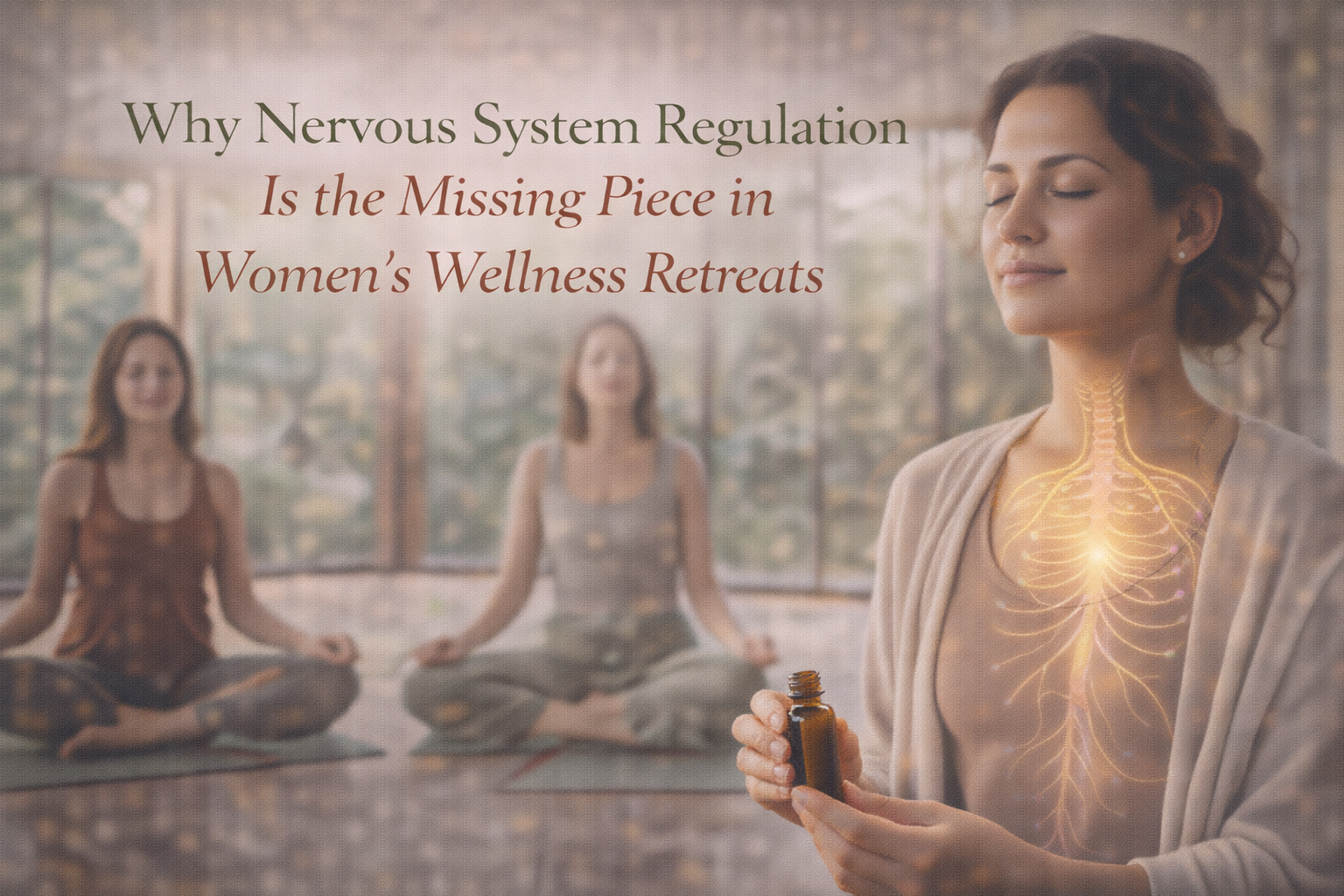
Women’s wellness retreats are often imagined as beautiful spaces for rest, renewal, and inspiration. And they can absolutely be that. Time in nature, nourishing meals, movement, meditation, journaling, community, and a pause from daily stress can feel deeply supportive.
But many women have had the experience of going on a retreat, feeling amazing while they are there, and then finding themselves right back in overwhelm a week later.
That does not mean the retreat failed. It often means something essential was missing:
nervous system regulation.
Because true healing is not only about taking a break. It is about helping the body feel safe enough to actually receive the break.
Quick Answer: Why Nervous System Regulation Matters at Retreats
If you are wondering why nervous system regulation is such an important part of women’s wellness retreats, here is the simple answer:
- Rest only goes so deep if the body is still stuck in fight-or-flight mode
- Safety helps the nervous system shift from survival into repair
- Regulation increases emotional capacity, presence, and clarity
- Slowing down can feel uncomfortable if the body is used to chronic stress
- A retreat becomes more transformational when women leave with tools they can actually use at home
In other words, nervous system regulation helps a retreat move from a temporary escape into a more embodied and sustainable experience.
What Women Often Need Most Is Not More Stimulation
Many women arrive at wellness retreats already running on empty. They are carrying stress, caregiving, emotional labor, overthinking, perfectionism, pressure, and the invisible weight of always needing to keep it together.
From the outside, a retreat may look like exactly what they need: yoga, workshops, beautiful meals, meaningful conversations, movement classes, maybe even a sound bath or cold plunge.
But when a nervous system is already overloaded, more input is not always what helps most.
Sometimes what the body needs first is less. Less urgency. Less performance. Less pressure to optimize the retreat experience. Less needing to “do healing right.”
Why Slowing Down Can Feel Harder Than It Looks
One of the most misunderstood parts of healing is that slowing down does not automatically feel calming.
For many women, slowing down can initially feel uncomfortable. Rest might bring up anxiety. Silence might make emotions louder. Spaciousness might reveal how much the body has been bracing.
This is not a sign that rest is wrong. It is often a sign that the nervous system has been living in survival mode for a long time.
That is why nervous system-aware retreats matter so much. They make room for this reality instead of assuming everyone will arrive and instantly melt into bliss.
What Makes a Retreat Nervous-System-Supportive?
A retreat does not need to be perfect to support the nervous system well. But there are certain qualities that make a big difference.
Element 01
Spacious Pacing
Why it matters: The nervous system often needs transition time. Spacious pacing gives the body time to integrate instead of staying in constant input mode.
Element 02
Predictability and Clear Structure
Why it matters: Predictability is calming to the nervous system. Safety is often built through simple things like clarity, steadiness, and consistency.
Element 03
Somatic and Body-Based Practices
Why it matters: Many women do not need more information. They need experiences that help the body actually feel safe, present, and supported.
Element 04
Sensory Gentleness
Why it matters: A retreat can be beautiful and still be too stimulating. A supportive retreat helps the senses soften rather than constantly react.
Element 05
Integration Support
Why it matters: Insight is helpful, but integration is what helps transformation stay with you when real life begins again.
The Difference Between a Beautiful Retreat and a Regulating Retreat
| Beautiful Retreat | Regulating Retreat |
|---|---|
| Feels inspiring and aesthetically nourishing | Helps the body actually settle and exhale |
| May focus on packed programming | Prioritizes pacing and spaciousness |
| Can create a temporary high | Supports sustainable nervous system shifts |
| Often emphasizes experience | Emphasizes safety, embodiment, and integration |
| May feel restorative in the moment | Leaves women with tools they can continue using at home |
Of course, a retreat can be both beautiful and regulating. The point is not to remove pleasure or inspiration. It is to recognize that the nervous system is often the bridge that helps all the other retreat elements actually land.
Why This Matters Especially for Women
Many women are moving through life with chronically activated nervous systems. They are carrying work pressure, relational demands, caregiving roles, emotional labor, high sensitivity, people pleasing, and the unspoken expectation that they should keep functioning no matter how depleted they feel.
So when women come to retreat spaces, they often need more than a wellness experience. They need a place where their body does not have to be “on.”
That is why nervous system regulation can feel like the missing piece. It meets women underneath the surface. Not only at the level of mindset or self-care, but at the level of physiology, safety, and capacity.
What Women Can Take Home From a Nervous-System-Supportive Retreat
- A deeper understanding of what their body actually needs
- Simple practices for calming stress in real time
- More awareness of personal limits, capacity, and pacing
- Greater ability to notice cues of safety and cues of overload
- A more compassionate relationship with rest, slowness, and healing
This is what makes a retreat experience more sustainable. It is not only the memory of feeling good for a few days. It is the beginning of a new relationship with the body.
"A retreat becomes transformational when it does more than offer rest. It helps the body remember how to receive rest, trust rest, and return to rest again at home."
If You Want Retreat Transformation to Last, Integration Matters
One of the reasons retreats can feel so powerful is that they remove many of the inputs that keep the nervous system activated. But real life returns. Schedules come back. Notifications come back. Responsibilities come back.
That is why integration matters so much. The question is not only, “Did the retreat feel healing?” The deeper question is, “Did the retreat help me build a nervous system practice I can actually bring into daily life?”
When the answer is yes, the retreat becomes more than a pause. It becomes a turning point.
Want support calming your nervous system beyond retreat mode?
My 1:1 Integrative Somatic Breathwork sessions help women move out of chronic stress, reconnect with their bodies, and build tools for lasting nervous system regulation.
Book a Breathwork Session with Rachel →Frequently Asked Questions
Why is nervous system regulation important at women’s wellness retreats?
Nervous system regulation helps the body feel safe enough to actually rest, receive support, and integrate change. Without that foundation, a retreat can feel inspiring in the moment but harder to embody afterward.
What makes a retreat supportive for the nervous system?
A nervous-system-supportive retreat often includes spacious pacing, predictable structure, rest, sensory gentleness, grounding practices, breathwork, nature, and an emotionally safe environment. The goal is not constant stimulation but helping the body settle.
Can a retreat help with burnout and anxiety?
A retreat can be supportive for burnout and anxiety, especially when it includes practices that help regulate the nervous system. It is often most helpful when the experience includes integration tools that can be brought home afterward.
What is the difference between a wellness retreat and a nervous system retreat?
A general wellness retreat may focus on inspiration, movement, nutrition, or relaxation. A nervous system retreat places more emphasis on safety, pacing, regulation, capacity, sensory environment, and helping the body come out of chronic stress patterns.
Why do some retreats feel amazing in the moment but hard to sustain afterward?
Sometimes a retreat creates temporary relief because you are away from daily stress, but lasting change requires integration. When nervous system regulation is part of the retreat experience, it becomes easier to bring the benefits home into everyday life.