What Happens During a Somatic Breathwork Session? A Step-by-Step Guide
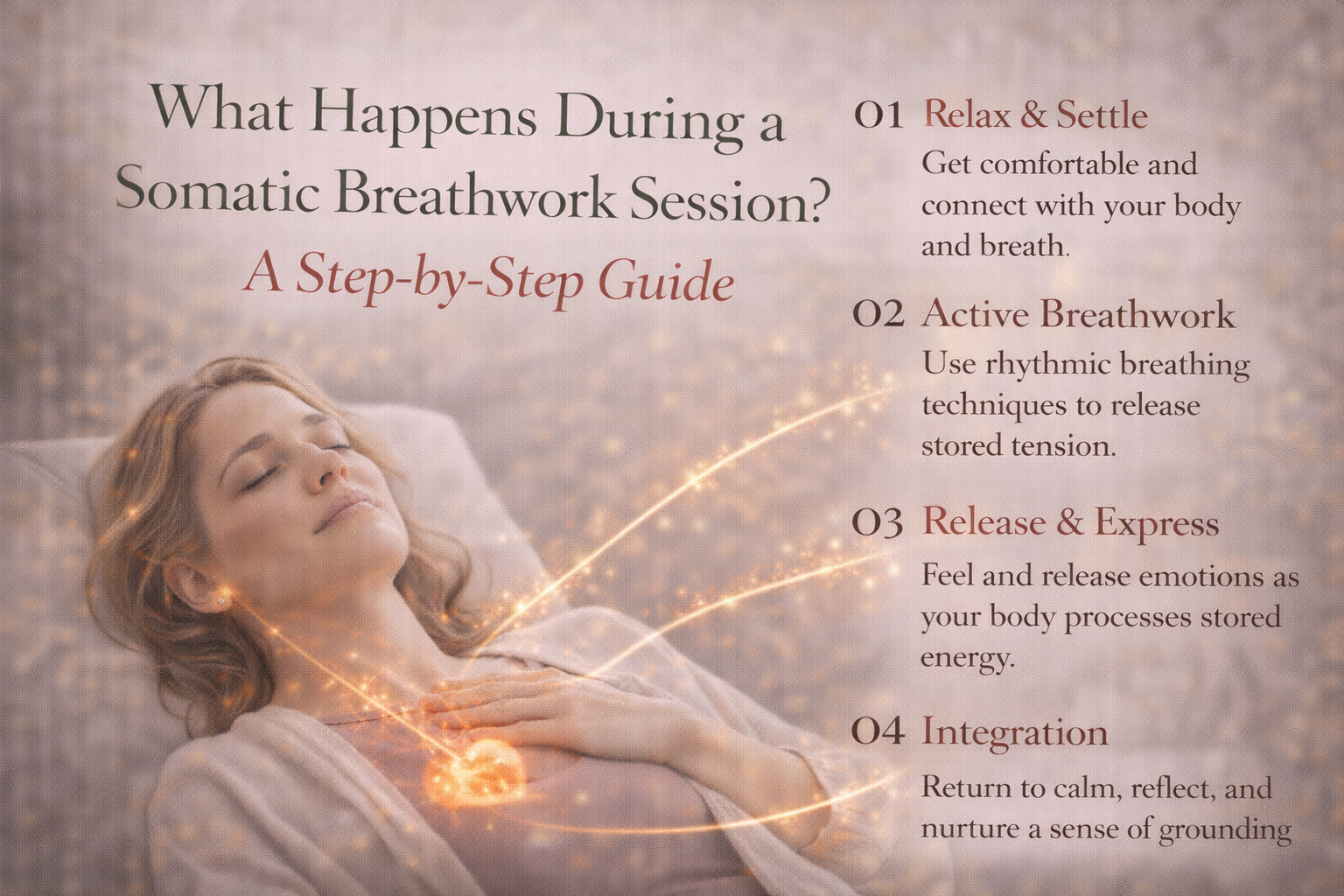
If you have been curious about somatic breathwork but are not quite sure what actually happens in a session, you are not alone. Many people feel drawn to the work while also wondering what to expect, how it works, and whether it will feel intense, emotional, calming, or unfamiliar.
That curiosity makes sense.
Somatic breathwork is different from casual deep breathing or a typical meditation class. It is a guided, body-based healing practice that uses intentional breathing to support nervous system regulation, emotional processing, and deeper connection with yourself.
And while each session is unique, there is often a clear structure that helps the body feel safe enough to open, release, and integrate.
Quick Summary: What to Expect in a Somatic Breathwork Session
A somatic breathwork session often includes:
- A check-in and conversation about what is present for you
- Intention setting and nervous system attunement
- Grounding into the body
- A guided breathing pattern
- Space for sensation, emotion, insight, or release
- Support throughout the process
- Gentle integration and reflection at the end
The goal is not to force a big experience. The goal is to help the body feel safe enough to access what is ready to move, soften, or be felt.
What Is a Somatic Breathwork Session?
A somatic breathwork session is a guided healing experience that combines intentional breathing with body awareness, nervous system support, and emotional attunement.
Unlike basic breathing exercises used only for quick relaxation, somatic breathwork goes deeper. It helps you connect with the body's sensations, patterns, and emotional material in a more conscious way. This can support release of stored stress, increased regulation, insight, and a stronger felt sense of safety.
In my work, the session is not only about the breath itself. It is also about the container: how safe, supported, and paced the experience feels for your nervous system.
Who Somatic Breathwork Is For
Somatic breathwork can be supportive for people experiencing anxiety, overwhelm, burnout, emotional stuckness, chronic stress, perfectionism, people pleasing, grief, disconnection from the body, or a general desire for deeper healing and self-connection.
It can also be helpful for people who have done a lot of cognitive work and insight-based healing but still feel like their body is holding onto something.
Many people come to somatic breathwork because they want more than just understanding. They want their body to actually feel the shift.
Step-by-Step: What Happens During a Somatic Breathwork Session
Step 01
Arrival and Check-In
Why it matters: This check-in helps create attunement and gives the session context. It also helps your body begin arriving before the active breathwork starts.
Step 02
Intention Setting
Why it matters: Intention helps orient the mind and body toward what feels meaningful without forcing a particular result.
Step 03
Grounding and Body Awareness
Why it matters: Somatic breathwork is not about bypassing the body. It is about entering it more fully and safely. Grounding helps create that foundation.
Step 04
The Guided Breathing Practice
Why it matters: The breath helps open access to layers of the body and nervous system that are not always reachable through thinking alone.
Step 05
Sensation, Emotion, and Release
Why it matters: The session is not about performing release. It is about making space for what the body is ready to show, express, or shift.
Step 06
Support and Co-Regulation Throughout
Why it matters: Somatic breathwork is not about pushing through. It is about staying in relationship with your body and supporting what is unfolding in a way that feels safe enough.
Step 07
Rest and Integration
Why it matters: Integration is where the body begins to organize the experience. This part is often just as important as the breathing itself.
Step 08
Reflection and Closing
Why it matters: Closing helps bring language and awareness to the experience while supporting a more grounded transition back into the rest of your day.
What Somatic Breathwork Can Feel Like
One of the biggest questions people ask is: What will I feel?
The honest answer is that it varies. Some sessions feel powerful and emotional. Others feel quiet and subtle. Some people cry. Some feel tingling in the hands or face. Some feel heat, spaciousness, relief, clarity, calm, or a deep exhale they did not know they were holding. Some sessions bring insight. Others bring rest.
There is no one “right” experience.
| Possible experience | What it may feel like | What it can mean |
|---|---|---|
| Emotional release | Tears, grief, anger, relief, tenderness | Emotion moving through the system |
| Physical sensation | Tingling, warmth, energy, softening, tension release | Increased body awareness or discharge |
| Mental clarity | Insight, memories, understanding, perspective | More access to inner material |
| Deep calm | Spaciousness, stillness, groundedness, relief | Nervous system settling |
| Subtle experience | Quiet noticing, gentleness, slight shifts | Healing does not have to be dramatic to be real |
Do You Have to Have a Big Emotional Release?
No. Not at all.
This is important because many people assume a “good” breathwork session must be dramatic. But healing is not always loud. Sometimes the most profound shift is that your body finally feels safe enough to soften. Sometimes it is simply that you feel more present, more connected, more honest, or more settled afterward.
Somatic breathwork is not about chasing catharsis. It is about supporting the nervous system in a way that allows what is ready to happen to happen.
How to Prepare for a Somatic Breathwork Session
- Wear comfortable clothing
- Hydrate beforehand
- Avoid a very heavy meal right before the session
- Give yourself some space before and after if possible
- Come with curiosity rather than pressure
- Let your body move at the pace it needs
You do not need to “do it right.” You do not need to know exactly what will happen. Your job is not to perform. Your job is to stay as open and connected to yourself as you can.
What Happens After the Session?
After a session, you may feel calm, clear, emotional, tender, energized, tired, open, or more connected to yourself. Sometimes there is an immediate sense of release. Sometimes the integration continues gently over the next hours or days.
This is why aftercare matters. Rest, hydration, journaling, quiet time, nature, and gentleness can all support the body in integrating what moved during the session.
"A somatic breathwork session is not about forcing an experience. It is about creating a safe enough space for your body to breathe, feel, release, and remember that healing can happen from the inside out."
Why Somatic Breathwork Can Be So Transformative
Somatic breathwork can be transformative because it works on multiple levels at once: body, breath, emotion, nervous system, and inner awareness.
It helps bridge the gap between what you understand mentally and what your body is still carrying. For many people, that is the missing piece. They do not need more insight alone. They need the body to participate in the healing too.
That is where breathwork can become powerful: not as performance, but as a pathway back to yourself.
Ready to experience somatic breathwork for yourself?
My 1:1 Integrative Somatic Breathwork sessions are designed to help you feel safe in your body, regulate your nervous system, and gently move what has been held beneath the surface.
Book a Breathwork Session with Rachel →Frequently Asked Questions
What happens during a somatic breathwork session?
During a somatic breathwork session, you are typically guided through grounding, intention setting, an intentional breathing pattern, body awareness, emotional processing, and integration. The session is designed to help regulate the nervous system and support release of stored stress or emotion in a safe, supported way.
What does somatic breathwork feel like?
Somatic breathwork can feel different for each person. Some people experience emotional release, tingling, warmth, relaxation, energy movement, tears, insight, or a deeper sense of calm. Others may feel subtle shifts such as more spaciousness, groundedness, or nervous system settling.
Do you talk during a somatic breathwork session?
Yes, often there is conversation before and after the active breathwork portion. Many sessions begin with check-in, intention setting, and nervous system attunement, and end with reflection and integration. During the breathing itself, verbal guidance may be offered while you stay focused on your inner experience.
Can somatic breathwork release trauma?
Somatic breathwork can support trauma healing by helping the body access and release stored stress, emotion, and survival patterns in a paced and supported way. It is not about forcing catharsis, but about helping the nervous system process what it has been holding.
How should I prepare for a somatic breathwork session?
It can help to wear comfortable clothing, hydrate, avoid a very heavy meal right beforehand, and give yourself some space before and after the session. Coming in with openness, curiosity, and a willingness to listen to your body is often more important than doing anything perfectly.